
Why Identifying the Type of Chronic Constipation Matters
Chronic constipation is a symptom with a wide range of potential causes. While many patients improve with dietary changes, lifestyle modifications, or medication, others continue to experience persistent symptoms because the underlying cause has not been identified.
Successful management begins with an accurate diagnosis. Chronic constipation can result from several distinct physiologic disorders, each requiring a different diagnostic approach and treatment strategy. Understanding these differences helps clinicians determine the most appropriate evaluation and guide patients toward more effective care.
The Three Primary Types of Chronic Constipation
Although patients may report similar symptoms, chronic constipation generally falls into one of three categories.
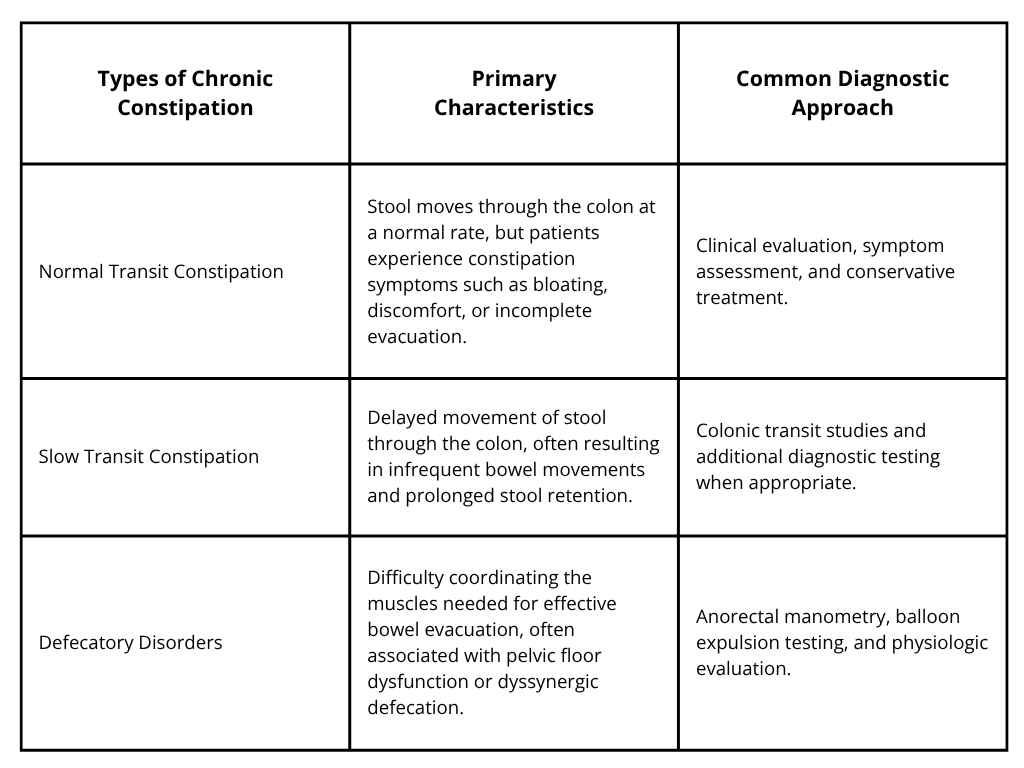
Although these conditions often present with similar symptoms, their underlying causes differ. Identifying the specific type of chronic constipation helps guide appropriate diagnostic testing and treatment.
Normal Transit Constipation
Normal transit constipation is often considered the most common subtype. Although stool passes through the colon at a normal rate, patients continue to experience symptoms commonly associated with constipation, including bloating, abdominal discomfort, and a feeling of incomplete evacuation.
Initial management typically focuses on dietary changes, increased fiber intake, hydration, physical activity, and pharmacologic therapies when appropriate. When symptoms persist despite these interventions, further evaluation may be warranted to rule out other contributing disorders.
Slow Transit Constipation
Slow transit constipation is characterized by delayed movement of stool through the colon, resulting in infrequent bowel movements and prolonged stool retention. Patients may report significant abdominal discomfort, bloating, or a longstanding history of constipation that has been resistant to conventional therapies.
Because treatment strategies may differ from other forms of constipation, accurately identifying delayed colonic transit is an important step in determining the most appropriate course of care.
Defecatory Disorders
Defecatory disorders occur when patients have difficulty coordinating the muscles involved in bowel evacuation. Rather than a problem with stool movement through the colon, these conditions involve impaired relaxation or coordination of the pelvic floor muscles and anal sphincter during defecation.
Patients with pelvic floor dyssynergia or other functional evacuation disorders often experience symptoms similar to other forms of chronic constipation, making diagnosis based on symptoms alone challenging. As a result, physiologic testing plays an important role in identifying these disorders and guiding treatment.
Why Accurate Diagnosis Matters
Although chronic constipation is frequently managed with conservative therapies, persistent symptoms should prompt clinicians to consider whether an underlying functional disorder is contributing to the patient’s condition.
Without objective diagnostic evaluation, patients may undergo multiple medication trials or lifestyle interventions without addressing the root cause of their symptoms. Identifying the specific type of constipation can help clinicians develop more targeted treatment strategies while avoiding unnecessary or ineffective therapies.
The Role of Anorectal Manometry
Anorectal manometry (ARM) is considered the gold standard for evaluating anorectal function and plays a critical role in assessing patients with suspected defecatory disorders.
By measuring anal sphincter pressures, rectal sensation, reflexes, and muscle coordination during simulated defecation, ARM provides valuable physiologic information that cannot be obtained through symptom assessment alone.
When combined with a comprehensive clinical evaluation and complementary diagnostic studies, anorectal manometry can help differentiate pelvic floor dysfunction from other causes of chronic constipation. This information supports more accurate diagnoses and helps guide individualized treatment plans, including pelvic floor biofeedback therapy when appropriate.
Taking a Targeted Approach to Chronic Constipation
Not every patient with chronic constipation requires physiologic testing. However, when symptoms persist despite conservative treatment or a defecatory disorder is suspected, further evaluation can help identify the underlying cause.
Accurate diagnosis allows clinicians to select more appropriate treatment strategies and improve patient outcomes. As part of a comprehensive evaluation, anorectal manometry provides objective insight into anorectal function and can help guide clinical decision-making.
Schedule Your Free Consultation
Get in touch with us to learn how our products can make an impact on your practice.